
CAN BUS (CONTROLLER AREA NETWORK)
CAN Bus (Controller Area Network): The Complete Guide for Automotive Diagnostics and Repair Looking to understand CAN Bus (Controller Area Network) from a workshop and diagnostics perspective? This comprehensive guide explains what CAN Bus is, how it works, why it’s essential in modern vehicles, how to test it with an oscilloscope, and the most common […]
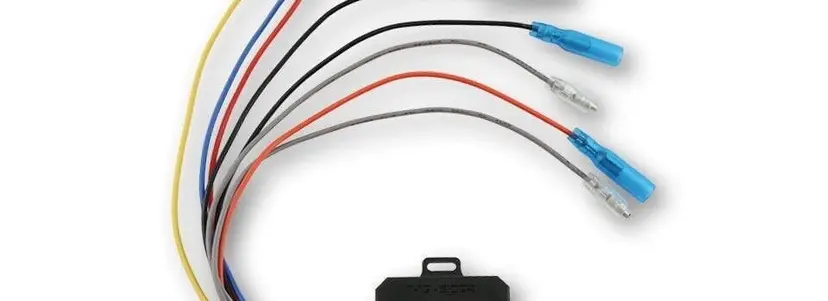
CAN Bus (Controller Area Network): The Complete Guide for Automotive Diagnostics and Repair
Looking to understand CAN Bus (Controller Area Network) from a workshop and diagnostics perspective? This comprehensive guide explains what CAN Bus is, how it works, why it’s essential in modern vehicles, how to test it with an oscilloscope, and the most common failure modes you’ll see in the field. Built on practical insights used by professional workshops.
What Is CAN Bus (Controller Area Network)?
CAN Bus is a robust, message-based automotive communication protocol developed by Bosch to let electronic control units (ECUs) and sensors communicate without a central host computer. Standardized as ISO 11898, it’s now used across automotive, aerospace, industrial automation, and medical devices. In vehicles, CAN consolidates wiring, increases reliability, and enables real-time data exchange up to 1 Mbps.
- Protocol type: Message-based, differential signaling
- Standard: ISO 11898
- Typical speeds: 250 kb/s (chassis/body), 500 kb/s (powertrain), up to 1 Mb/s (high-speed CAN)
- Role in diagnostics: One of five protocols used in OBD-II
/index_clip_image004_0003.jpg)
Why CAN Bus Matters in Modern Vehicles
- Reduces wiring complexity versus multi-wire looms
- Ensures reliable communication under electrical noise (EMI/inductive spikes)
- Supports modular design: nodes can be added or removed without disrupting the network
- Enables real-time control of safety-critical systems (engine, ABS, airbags)
- Integrates multiple sub-networks via gateways (e.g., high-speed CAN, mid-speed CAN, LIN)
How CAN Bus Works: Core Principles
Differential Signaling (CAN High and CAN Low)
Communication uses two wires:
- CAN High (CAN-H)
- CAN Low (CAN-L)
Electrical characteristics (typical):
- Idle (recessive): Both lines at about 2.5 V
- Dominant bit: CAN-H ≈ 3.75 V, CAN-L ≈ 1.25 V
- Differential voltage ≈ 2.5 V
Because the receiver measures the difference between CAN-H and CAN-L, the network is inherently resistant to noise and ground offsets—ideal for mobile and high-EMI environments.
Message-Based, Priority-Driven Arbitration
- Each node broadcasts frames with an identifier (ID).
- All nodes see all messages; nodes only act on relevant IDs.
- Arbitration ensures time-critical messages (e.g., engine, brake, airbag) take priority over less critical traffic (e.g., infotainment, lighting).
- This guarantees deterministic behavior for safety systems.
Network Topology and Gateways
- Vehicles often run multiple CAN networks:
- High-speed CAN (500 kb/s): engine, transmission, ABS
- Medium-speed CAN (250 kb/s): chassis/body systems
- LIN (Local Interconnect Network): single-wire, low-speed peripherals (mirrors, windows)
- Gateways route and filter data between networks to maintain performance and security.
CAN Bus vs LIN Bus: When Each Is Used
- CAN: Multi-master, high reliability, higher speed, differential pair, used for critical and time-sensitive systems.
- LIN: Single-wire, low-cost, low-speed, master-slave, used for comfort/convenience functions (mirrors, seats, climate control actuators).
Electrical Design: Termination, Power, and Wiring
- Termination: A standard high-speed CAN network requires 120 Ω resistors at both ends (effective 60 Ω across the bus). Loss of termination degrades signal integrity and can prevent communication.
- Power: CAN nodes may be powered via a separate supply. Some harnesses integrate CAN and power in a single 4-core cable; others keep them separate (two 2-wire cables).
- Cable: Twisted pair for CAN-H and CAN-L ensures balanced impedance and improved noise immunity.
- Grounding: Although CAN is differential, proper grounding and shield strategies reduce EMC issues.
CAN Bus in OBD-II Diagnostics
CAN is one of the protocols used in OBD-II compliant vehicles. Scan tools communicate over the diagnostic connector to retrieve DTCs, live data, and perform service functions. Knowing the CAN physical layer behavior helps diagnose no-communication issues, U-codes (communication faults), and intermittent network problems.
How to Test CAN Bus with an Oscilloscope (Step-by-Step)
This is a proven workshop procedure for verifying CAN integrity:
- Identify CAN pins
- Access an ECU connector or other accessible CAN node. Locate the CAN-H and CAN-L wires.
- Set the oscilloscope
- Input range: 5 V/div is typically sufficient.
- Use two channels for simultaneous CAN-H and CAN-L measurement.
- Connect probes
- Channel 1 probe: CAN-H; ground clip to solid chassis ground.
- Channel 2 probe: CAN-L; ground clip to solid chassis ground.
- Key on
- Switch ignition ON (engine can be OFF).
- Observe waveforms
- Expect mirrored, complementary signals: when CAN-H rises, CAN-L falls, creating ~2.5 V differential.
- Idle lines centered around ~2.5 V each.
- Validate
- Peak-to-peak and differential voltages correct?
- Signal present on both lines?
- Symmetry and clean edges without excessive ringing?
Quick checks:
- Both lines near 2.5 V at rest: normal.
- Dominant bits: CAN-H ~3.5–3.8 V, CAN-L ~1.2–1.5 V.
- If only one line toggles or levels are off, suspect wiring, termination, or shorts.
/CAN.png)
Common CAN Bus Failure Modes (ISO 11898)
Typical real-world faults you may observe:
- CAN-H interrupted (open circuit)
- CAN-L interrupted (open circuit)
- CAN-H shorted to battery voltage
- CAN-L shorted to battery voltage
- CAN-H shorted to ground
- CAN-L shorted to ground
- CAN-H shorted to CAN-L (pair short)
- Both lines interrupted at the same location
- Loss of connection to the termination network (missing or incorrect 120 Ω ends)
Symptoms include:
- No communication with one or more ECUs
- U-codes (e.g., U0001, U0100—manufacturer dependent)
- Intermittent network dropouts
- ABS/airbag warnings, limp mode, inoperative cluster or infotainment
Diagnostic Strategy: From Symptom to Root Cause
- Scan tool baseline
- Note modules that don’t communicate. Identify which CAN segment they belong to (high-speed vs mid-speed).
- Physical inspection
- Check harness routes near battery trays, footwells, door sills, seat rails, and known chafe points.
- Look for water ingress, corrosion at connectors, aftermarket accessory wiring taps.
- Resistance tests (key OFF, battery disconnected if required)
- Measure across CAN-H and CAN-L at the DLC or convenient node.
- Expect ~60 Ω with both terminators present and parallel.
- Reading ~120 Ω: one terminator missing.
- Reading >>120 Ω or open: broken line or both terminators missing.
- Reading <<60 Ω: short or extra termination.
- Voltage tests (key ON)
- CAN-H ~2.5 V idle rising during traffic; CAN-L ~2.5 V idle dropping during traffic.
- One line fixed at 0 V or 12 V: short to ground or battery.
- Isolation
- Unplug suspected nodes one at a time to see if the bus recovers.
- Use breakout leads to monitor live while disconnecting nodes.
Pro tip: A noisy or failed node can hold the bus dominant, blocking all traffic. If disconnecting a specific ECU restores communication, that node (or its wiring) is likely the culprit.
Performance and Design Considerations
- Bus load: High bus utilization can delay lower-priority messages. Ensure bandwidth planning prioritizes safety-critical frames.
- Cable length and stubs: Long stubs create reflections. Keep stubs short; place termination at bus ends.
- Speed selection: 500 kb/s for powertrain, 250 kb/s for chassis body; match OEM design for reliable timing margins.
- Gateways and security: Modern vehicles use gateways to segment networks and mitigate attack surfaces.
CAN Bus Safety and Reliability
- Electrical noise immunity: Differential signaling and twisted pair manage EMI from ignition systems, motors, and alternators.
- Fault confinement: CAN controllers implement error counters (Transmit/Receive) and transition nodes into error passive or bus-off states to protect the network.
- Redundancy: Some safety systems deploy multiple networks or fallback paths to maintain availability.
Summary
The CAN Bus is the backbone of modern vehicle electronics, enabling fast, reliable, and prioritized communication between ECUs. Understanding differential signaling, proper termination, and arbitration will help you diagnose network issues efficiently. With a two-channel oscilloscope and a structured approach—resistance checks, voltage validation, and node isolation—you can pinpoint wiring faults, shorts, missing terminators, and rogue modules. Mastering these fundamentals is essential for resolving U-codes, no-comm situations, and intermittent electrical problems across today’s increasingly networked vehicles.
If you need professional diagnostics, calibration, or repair for CAN-related issues, consult an experienced workshop with the right tools, wiring information, and OEM procedures.
Related reading
Car Paint Shops near me
Your affordable car body shop You rely on your vehicle to get you from point A to point B. When unexpected damage or disrepair occurs, it is important to get in touch with an auto body repair shop that you can trust. The team of auto body repair specialists at fixmycar in Islamabad has been […]
honda
Best Suspension Parts at Fixmycar.pk
Why Are Suspension Parts Important for Your Vehicle? Best Suspension parts play a crucial role in ensuring a smooth, stable, and comfortable ride. A well-maintained suspension system helps: Absorb shocks from rough roads Improve handling and control Enhance overall driving comfort For vehicles like 4×4s, suspension becomes even more critical due to off-road demands. Why […]

5 Warning Signs Your Car Needs Immediate Wheel Alignment and Balancing
What is Wheel Alignment and Balancing? Wheel alignment is the process of adjusting the angles of your car’s wheels so they are perfectly aligned with each other and perpendicular to the road. This ensures smooth driving, even tire wear, and better fuel efficiency. Wheel balancing involves distributing the weight of the wheel and tire evenly. […]
mercedes
Importance of Pre-Purchase Inspections for Used Mercedes-Benz Vehicles
Introduction to Pre-Purchase Inspections for Used Mercedes-Benz Vehicles When considering buying a used Mercedes-Benz vehicle, conducting a pre-purchase inspection is a crucial step in ensuring the investment is worthwhile. This section will outline the importance of these inspections and what to expect when undergoing this process. By uncovering any hidden issues through a pre-purchase inspection, […]

honda
Honda Civic Turbo Transmission Failures
Honda Civic Turbo Transmission Failures: Questions and Answers What Is the Honda Civic Turbo? The Honda Civic Turbo is a modern version of Honda’s popular compact car equipped with a turbocharged engine designed to deliver better performance while maintaining fuel efficiency. Many recent Civic models use a 1.5-liter turbocharged engine that produces more power than […]

toyota
Toyota Raize in Pakistan: Price, Specs, and Variants
Toyota Raize in Pakistan: Price, Specs, Variants & Comparison with Daihatsu Rocky The Toyota Raize is making waves in Pakistan’s compact SUV market. With its head-turning design, fuel-efficient engine, and advanced features, the Raize has become a top choice for urban drivers looking for practicality combined with modern style. This article offers a comprehensive review of the Toyota […]