
City Brake Active System-CTBA
City Brake Active System Structure Description CTBA CTBA utilizes a combination of advanced sensors and intelligent algorithms to detect potential obstacles ahead. Whether it’s a sudden pedestrian crossing or a vehicle abruptly stopping, CTBA springs into action, automatically applying the brakes to avoid an imminent collision. City Brake Active System (CTBA) is a safety feature […]
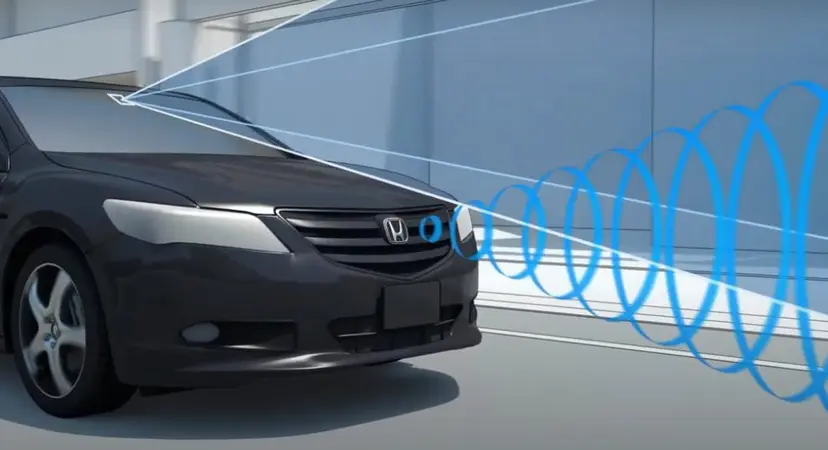
City Brake Active System Structure Description CTBA
CTBA utilizes a combination of advanced sensors and intelligent algorithms to detect potential obstacles ahead. Whether it’s a sudden pedestrian crossing or a vehicle abruptly stopping, CTBA springs into action, automatically applying the brakes to avoid an imminent collision. City Brake Active System (CTBA) is a safety feature in automobiles that helps prevent low-speed collisions. It is also known as Autonomous Emergency Braking (AEB) or Forward Collision Warning (FCW) in some vehicles.
The CTBA system uses sensors, cameras, and other advanced technologies to detect objects in the vehicle’s path, such as other vehicles, pedestrians, or obstacles. If the system determines that a collision is imminent and the driver has not taken corrective action, the CTBA system will automatically apply the brakes to avoid or reduce the impact of the collision.
Note: The following safety data is provided to us by the official Honda Technical documents (CTBA HONDA)
** Note that this system activated only within 5~30 km/h **
Series Honda Vezel RU3
Series Honda Vezel RU4
CTBA City Brake Active System was developed by Honda to detect and prevent a pending forward collision. It will cause the automatic application of brakes if the driver doesn’t respond to avoid a crash. It is based on the millimeter wave radar wave bouncing technology.
City Brake Active System
City Brake Active System / Radar Control Unit
How CTBA works?
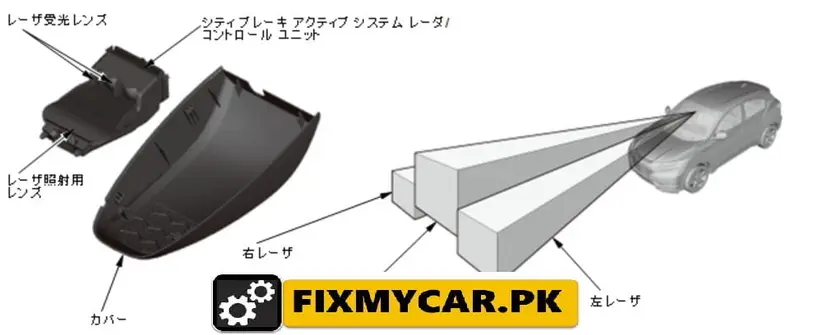
City Brake Active System The radar/control unit consists of a radar transmitter, a light-receiving lens, an LED dedicated to shielding detection, and an ECU. The system utilizes the mill wave radar bouncing technology to trigger brakes so as to improve the emergency reaction process.
The distance to the object is calculated by irradiating three laser beams from the radar transmitter. It is done from the front of the vehicle and the bounce-back time of the laser is learned. In addition, it receives related switch and sensor signals from the F-CAN line and outputs control signals for each control to each unit.
CTBA
Detection Range
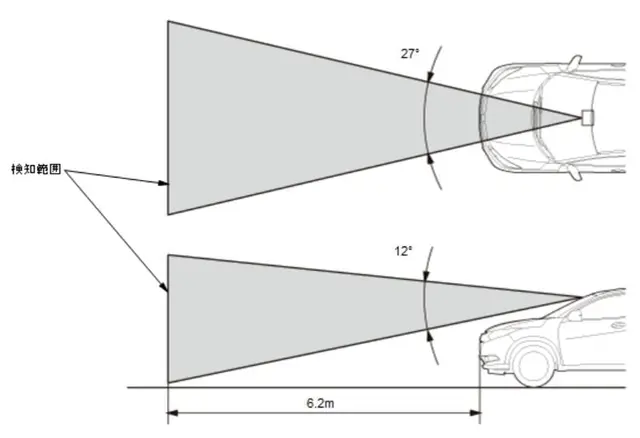
The detection range of CTBA and some other radars is 6 meters to 8 meters and depends a lot on the size and shape of the vehicle or object in front. Some driving conditions such as driving between tree shades, snow, and rain can also cause this system to behave improperly.
Radar
The detection range of the city brake active system radar is 6.2 m from the tip of the vehicle, 27 ° in the left-right direction, and 12 ° in the up-down direction
When CTBA doesn’t work?
Sometimes the city brake active system may not work at the required time. This can happen a lot in damaged cars having a bad repair job and sometimes in vehicles that get a windscreen replacement job done by a non-professional workshop.
- Also, the CTBA system can cause errors in following events
- If the vehicle in front is diagonal, sideways, or facing, and it is difficult to detect the vehicle.
- When an oncoming vehicle suddenly jumps out in front of your vehicle
- If your vehicle suddenly jumps out in front of an oncoming vehicle.
- When a car jumps out in front of your car at an intersection.
- Mostly in bad weather such as rain, fog, and snow.
- When the roads have curves, etc.
- If the laser reflection is weak and difficult to detect, such as when the vehicle in front is extremely dirty.
- It is difficult for the laser to detect due to the material, shape, size, of a car with a special shape such as a carrier car, a bicycle, a motorcycle, etc.
- Malfunction of the Radar assembly
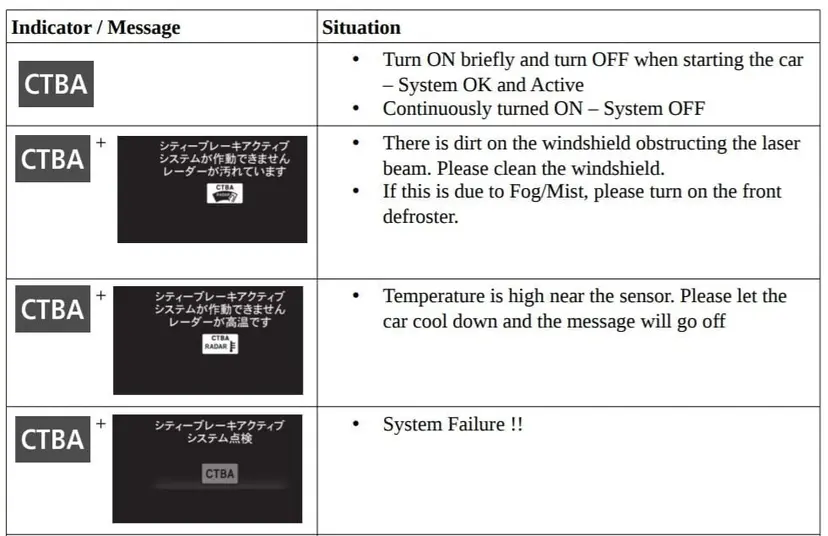
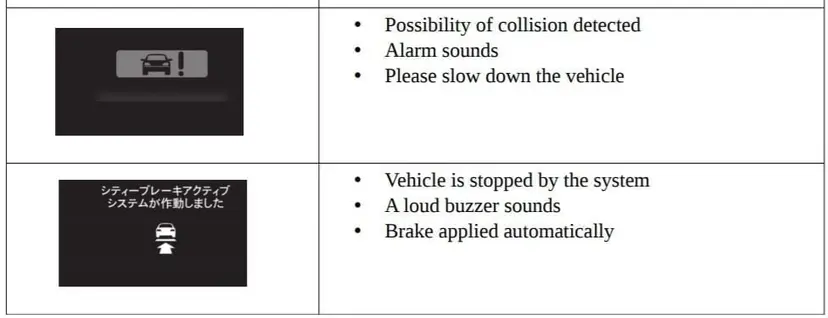
Indications and Warnings Related to CTBA
Indicators
CTBA installation
City Brake Active System Radar / Control Unit Detachment-Removal / Installation requires a number of tools to properly remove the unit from the trim. The unit needs to be recalibrated properly after the removal and installation of new unit. The millimeter wave radar assembly works in conjunction with number of sensors and a minor misalignment can cause random braking. This will create lots of inconvenience for the driver.
Please note that the unit is unable to detect motorbikes properly so do not depend on it. Once the radar is out of its range, you can contact our technicians at fixmycar.pk that are fully trained to handle the job and re calibrate the radar unit. This will require lots of patience and fine adjustments for a successful operation. We also recommend that vehicles that have DTC,s associated with the CTBA to be properly diagnosed before attempt. It is not always necessary to replace with a new unit.
How to turn off the CTBA system ?
You can turn OFF this system through the settings menu. Please refer to “Vehicle Settings Menu”
document for more details.
- When you turn OFF the system, the indicator lights ON
- The system automatically turns ON when you stop and re-start the car.
- You may want to stop the system when driving in very heavy traffic
- Driving on off-road conditions
How to release the activated system manually?
- Stepping on the brake pedal
- Releasing the accelerator pedal
- Pressing the accelerator pedal for about 4 seconds
- Turning the steering wheel
Common DTC associated with Radar assembly unit failure P2583.
Related reading
honda
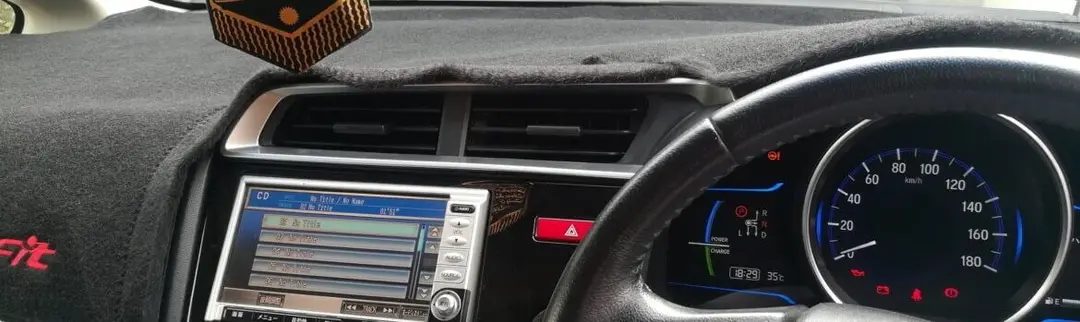
Warning Light – Honda Vezel and GP5
The incorporation of advanced sensor technologies in these models enhances their ability to monitor various vehicle functions, contributing to a smoother and more secure driving experience. Whether it’s a check engine light, ABS warning, or tire pressure alert, the comprehensive warning light system in the Honda Vezel and GP5 reflects the commitment to driver awareness […]
honda
P0301 Code Cylinder 1 Misfire Detection
Welcome to our comprehensive guide on the P0301 code, specifically addressing the misfire detection in Cylinder 1. In this article, we will delve deep into the details, offering valuable insights and knowledge that will help you understand the P0301 code, its implications, and potential causes. What is the P0301 Code? The P0301 code is a […]
honda
Best Suspension Parts at Fixmycar.pk
Why Are Suspension Parts Important for Your Vehicle? Best Suspension parts play a crucial role in ensuring a smooth, stable, and comfortable ride. A well-maintained suspension system helps: Absorb shocks from rough roads Improve handling and control Enhance overall driving comfort For vehicles like 4×4s, suspension becomes even more critical due to off-road demands. Why […]
honda
Honda Civic Turbo Transmission Failures
Honda Civic Turbo Transmission Failures: Questions and Answers What Is the Honda Civic Turbo? The Honda Civic Turbo is a modern version of Honda’s popular compact car equipped with a turbocharged engine designed to deliver better performance while maintaining fuel efficiency. Many recent Civic models use a 1.5-liter turbocharged engine that produces more power than […]

tesla
Tesla Diagnostic Interfaces & Protocols
Tesla Diagnostic Interfaces & Protocols: Everything You Need to Know If you’re diving into Tesla diagnostics, you’ll quickly realize that it’s not your typical OBD-II experience. Tesla vehicles use a mix of proprietary and evolving diagnostic interfaces depending on the model year. In this guide, we’ll break down Tesla diagnostic ports, what protocols they use, […]
![Honda ADAS Calibration Guide [Step-by-Step Tutorial]](/uploads/2025/09/Honda-ADAS-Calibration-1280.webp)
honda
Honda ADAS Calibration Guide [Step-by-Step Tutorial]
Honda ADAS Calibration Operation Instructions Advanced Driver Assistance Systems (ADAS) have become a vital component of modern vehicles, enhancing safety, reducing human error, and aiding drivers in critical moments. The Honda is equipped with a sophisticated ADAS suite, including features such as lane departure warning, forward collision warning, and adaptive cruise control. Proper calibration of ADAS […]