
Service
Fleet Telematics, ADAS, LiDAR & AI Camera Installation
How commercial fleets install, calibrate, commission and go live with vehicle telematics, ADAS, LiDAR, AI dash cameras, ELDs, driver monitoring and fleet management systems across multiple vendors, and what to look for in a professional installation partner like Installmatics.
Commercial fleets work under constant pressure on safety, compliance, operating costs and customer expectations. A professional vehicle telematics and fleet technology commissioning company helps businesses deploy, integrate, test and activate the systems that keep trucks, vans, buses, construction equipment and service vehicles connected and productive.
GPS fleet tracking, electronic logging devices, Advanced Driver Assistance Systems (ADAS), LiDAR sensors, AI-powered cameras, driver monitoring and real-time video telematics all depend on more than mounting hardware. Each one needs careful installation, correct calibration, reliable wiring, platform configuration, driver training and verified go-live support.
For fleets that need a dedicated installation and commissioning partner, Installmatics specialises in vendor-neutral fleet technology rollouts, from a single pilot vehicle to multi-depot deployments.
Key Takeaways
- Installation quality decides data quality. Loose wiring, poor antenna placement or wrong engine-data mapping cause missing trips, false fault codes and failed compliance reports.
- ADAS, LiDAR and AI cameras must be calibrated per vehicle type. A setup that works on a delivery van will not automatically work on a tractor-trailer or bus.
- Commissioning is not the same as installation. A unit is only ready when it is powered correctly, reporting, assigned to the right vehicle and visible in the fleet platform.
- Multi-vendor fleets need a vendor-neutral integrator to make telematics, ELD, video and sensor systems behave like one operating system.
- A structured go-live plan (pilot, validation, training, phased rollout, closeout) protects adoption and return on investment.
Complete Commercial Fleet Technology Services
A full-service fleet technology installation and commissioning partner supports the entire deployment lifecycle:
- Vehicle telematics installation and GPS tracking activation
- AI dash camera, road-facing camera and cab-facing camera installation
- ADAS sensor calibration and functionality testing
- LiDAR installation, alignment and system validation
- Electronic Logging Device (ELD) installation and driver-log configuration
- Driver monitoring system deployment
- Fleet management software setup and data integration
- Multi-vendor hardware commissioning
- Commercial fleet go-live planning and rollout support
- Ongoing field service, repairs, replacements and quality assurance
Whether a company runs five delivery vans or thousands of Class 8 trucks, fleet technology has to work the same way on every vehicle, every route and every driver shift.
Vehicle Telematics Installation and Commissioning
Vehicle telematics combines GPS location, vehicle diagnostics, driver behaviour, engine performance, fuel use, utilisation and maintenance data into one connected fleet management environment. A professionally installed telematics solution shows fleet managers where vehicles are, how they are being driven and when they need service.
Common telematics components include:
- GPS tracking devices
- OBD-II, J1939, J1708 or CAN-bus connections
- Engine diagnostic interfaces (see our OBD2 code list for common fault codes)
- Asset trackers and trailer trackers
- Temperature and cargo sensors
- Tyre-pressure monitoring integrations
- Bluetooth or cellular gateways
- Driver ID readers, RFID systems and key fobs
- Panic buttons and emergency-alert devices
Accurate installation is essential. Poor wiring, loose connections, incorrect engine-data mapping, weak antenna placement or incomplete device registration can lead to missing trips, unreliable GPS reporting, inaccurate mileage, false fault codes and failed compliance reporting.
A qualified commissioning team checks that each device is installed safely, powered correctly, reporting consistently, assigned to the correct vehicle and visible in the fleet management platform before the unit goes back into service.
ADAS Installation for Safer Commercial Vehicles
Advanced Driver Assistance Systems (ADAS) use cameras, sensors, radar and vehicle data to identify road risks and alert drivers to dangerous conditions. For commercial fleets, ADAS supports safer driving and reduces exposure to collisions, claims, downtime and preventable maintenance costs.
ADAS solutions may include:
- Forward-collision warnings
- Following-distance and headway monitoring
- Lane-departure warnings
- Pedestrian and cyclist detection
- Speed-limit recognition
- Tailgating alerts
- Stop-sign and traffic-signal detection
- Distracted-driving alerts
- Harsh-braking and aggressive-acceleration event detection
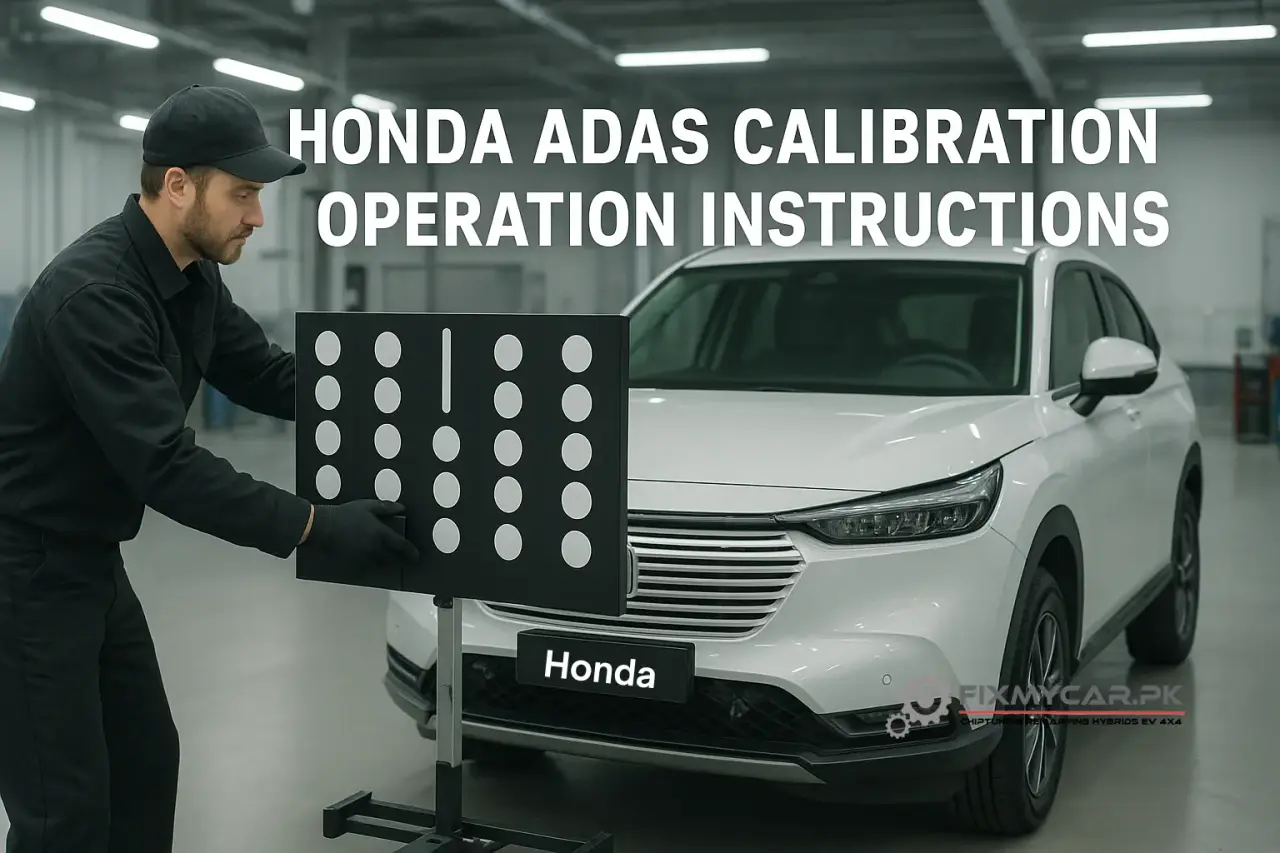
Commercial ADAS installations need correct camera placement, secure mounting, clear visibility, proper cable routing and calibration to the vehicle type and manufacturer requirements. A system on a delivery van may need a different configuration from the same system on a tractor-trailer, school bus, utility truck, refuse vehicle or construction machine. Factory ADAS works the same way; our Honda ADAS calibration guide and millimetre-wave radar explainer show how sensitive these sensors are to alignment.
Go-live should include operational testing in real driving conditions. This confirms that alerts are accurate, video clips are captured, event thresholds are sensible and the fleet manager receives useful information rather than a flood of false alerts.
LiDAR Installation and Sensor Calibration
LiDAR (Light Detection and Ranging) uses laser pulses to build detailed measurements of the surrounding environment. In commercial transport, LiDAR supports advanced safety systems, collision avoidance, mapping, autonomous or semi-autonomous operation, yard automation and specialised vehicle applications.
LiDAR is especially valuable where vehicles work near people, obstacles, loading docks, warehouses, work zones, terminals, construction sites or restricted industrial areas.
A professional LiDAR installation and commissioning process may include:
- Evaluating mounting positions and sensor coverage areas.
- Installing brackets, enclosures, power connections, communication wiring and protective routing.
- Aligning sensor orientation with vehicle geometry and operating requirements.
- Configuring network, gateway, cloud or edge-computing connections.
- Testing field of view, detection zones, object classification and environmental reliability.
- Validating data flow into the customer's telematics, safety, automation or fleet management platform.
- Documenting the final installation for maintenance, warranty and compliance.
LiDAR performance depends heavily on placement and calibration. A sensor that is misaligned, blocked, loosely secured or wrongly configured returns incomplete data and weakens the safety or automation system built on it.
AI Camera Installation and Video Telematics
AI-powered cameras are now central to commercial fleet safety programmes. Traditional dash cameras only record video. AI camera systems identify driving behaviours and road conditions in real time, deliver in-cab alerts, send safety events to fleet managers and provide video evidence for coaching, incident review and claims defence.
AI camera systems can include:
- Road-facing dash cameras
- Driver-facing or cab-facing cameras
- Dual-facing camera systems
- Side-view, rear-view and backup cameras
- Multi-camera 360-degree systems
- Cargo-area, trailer and load-monitoring cameras
- AI-enabled pedestrian and vulnerable-road-user detection cameras
Common AI safety events include:
- Distracted driving and mobile-phone use
- Drowsiness or fatigue indicators
- Smoking detection
- Seat belt not worn
- Following too closely
- Harsh braking, harsh turns and rapid acceleration
- Collision or near-collision events
- Lane departure
- Stop-sign violations
- Loss of driver attention
A good AI camera installation balances safety, privacy, driver acceptance and operational usefulness. Camera angles must give the intended coverage without blocking the driver's view. Cables must be routed securely and neatly. The device needs stable power, dependable connectivity and the correct vehicle assignment in the software platform.
Fleet Management System Integration
Telematics and safety hardware become far more valuable when the data is centralised in a fleet management system. Instead of checking separate tools for GPS tracking, ELD logs, camera footage, maintenance, fuel and driver scores, managers use integrated dashboards to decide faster.
A fleet management deployment can connect:
- Live vehicle location and route history
- Driver hours of service and duty status
- Vehicle inspection reports
- Maintenance schedules and diagnostic trouble codes (compare with manufacturer maintenance schedules)
- Fuel consumption and idling data
- Driver safety events and coaching records
- Camera video clips and incident evidence
- Asset, trailer and equipment tracking
- Geofencing and arrival/departure notifications
- Utilisation, productivity and route-performance reporting
Integration matters most for fleets using several vendors. A business might use one provider for ELD compliance, another for video telematics, another for trailer tracking and a fourth for maintenance management. An experienced commissioning company coordinates those systems, confirms data ownership, tests APIs or integrations where available and makes sure each vehicle is represented accurately across every platform.
Electronic Logging Device (ELD) Installation
Electronic Logging Devices are essential for commercial fleets that must track drivers' hours of service. An ELD records driving time and duty status through a connection to the vehicle's engine and onboard systems.
ELD installation and activation services can include:
- ELD hardware installation
- ECM or engine-data connection
- Vehicle and driver assignment
- Mobile app setup
- Duty-status configuration
- Data-transfer testing
- Driver training and onboarding
- Unassigned-drive-time review
- Inspection-mode verification
- Troubleshooting of power, communication and vehicle-data issues
A professional ELD rollout does not stop at hardware. Drivers need to know how to log in, change duty status, certify records, use personal conveyance where company policy allows, transfer logs during a roadside inspection and report device malfunctions.
Fleet managers also need administrative training so they can manage driver accounts, review exceptions, resolve unassigned driving events and keep compliance processes consistent.
Driver Monitoring Systems and Safety Coaching
Driver monitoring systems use AI cameras, sensors and telematics data to spot behaviours that raise risk. They help fleets detect distraction, fatigue, speeding, harsh driving or repeated policy violations before they lead to a serious crash.
An effective driver monitoring programme is not a surveillance programme. It should create a fair, consistent and coachable safety process.
A strong commissioning and go-live partner helps fleets set up:
- Clear event thresholds and alert settings
- Escalation procedures for serious safety incidents
- Driver coaching workflows
- Supervisor access permissions
- Privacy and data-retention settings
- Safety scorecard definitions
- False-alert review processes
- Driver acknowledgement and training materials
- Reporting for insurance, risk and compliance teams
For example, a fleet may choose immediate in-cab alerts for high-risk behaviour such as drowsiness, distraction or close following, while sending lower-risk events to weekly coaching reports. Drivers are protected in real time and operations teams are not buried in low-value alerts.
Multi-Vendor Fleet Technology Commissioning
Commercial fleets often run technology from different manufacturers and software providers. A capable installation company should be vendor-neutral and able to support many hardware types, vehicle classes and operating environments.
Mixed fleets commonly combine hardware and platforms such as telematics gateways, ELD units, AI dash cameras, factory or aftermarket ADAS, LiDAR sensors, tablets, trailer trackers and cloud dashboards, each from a different supplier. The goal of commissioning is to make the finished installation behave like one reliable system, whichever vendors the fleet has chosen.
| Technology | What commissioning verifies |
|---|---|
| GPS telematics | Power, ignition sense, GPS fix, cellular reporting, correct vehicle assignment |
| ELD | Engine-data connection, driver login, duty-status sync, inspection mode |
| AI cameras | Field of view, video upload, event triggers, in-cab alerts |
| ADAS | Sensor alignment, calibration targets, live-road alert accuracy |
| LiDAR | Mounting geometry, detection zones, data flow to edge or cloud |
| Driver monitoring | Cab camera angle, fatigue/distraction detection, privacy settings |
| Fleet platform | Device registration, API/integration tests, user permissions |
Key multi-vendor commissioning activities include:
- Confirming approved hardware and installation requirements
- Reviewing vehicle make, model, year and electrical architecture
- Verifying compatibility with existing fleet equipment
- Coordinating installation schedules with fleet operations
- Applying standard installation procedures across locations
- Registering devices in the correct customer platform
- Assigning serial numbers, SIM cards, vehicles, drivers and assets
- Testing GPS, cellular connectivity, engine data, video uploads and alerts
- Running acceptance tests before go-live
- Keeping installation records and photo documentation
- Supporting warranty, repair, replacement and de-installation
This approach suits fleets with mixed vehicles, multiple depots, changing drivers, leased equipment, seasonal operations, or acquisitions that bring in new technology vendors. Installmatics is built around exactly this kind of multi-vendor commissioning.
Commercial Fleet Go-Live Support
A successful rollout needs planning. Installing devices without a structured go-live process leads to missing data, frustrated drivers, inconsistent safety alerts and a slower return on investment.
A commercial fleet go-live plan should include:
- Pilot installation on a representative group of vehicles
- Validation of power, GPS, cellular service, engine data and camera coverage
- Review of alert rules and operational thresholds
- Fleet manager and dispatcher training
- Driver orientation and support
- Deployment scheduling by terminal, region or vehicle type
- Quality-control inspections and audit photos
- Exception tracking for vehicles that need follow-up
- Post-installation monitoring
- Final acceptance and project closeout
The pilot phase matters because it surfaces problems before full rollout. A fleet may find that one vehicle model needs an alternate harness, that a camera angle needs adjusting, or that the first alert settings produce too many low-value notifications. Fixing those early improves adoption across the whole fleet.
Why Professional Installation Matters
Fleet technology is only as reliable as its installation and commissioning. Professional service protects the investment in hardware, software, safety programmes and compliance systems.
A properly managed deployment helps commercial fleets:
- Improve driver safety and reduce preventable risk
- See vehicles, trailers and mobile assets clearly
- Support ELD and hours-of-service workflows
- Investigate incidents with video and telematics evidence
- Reduce unauthorised vehicle use and excessive idling
- Plan preventive maintenance better
- Build driver coaching and safety culture
- Support insurance and claims documentation
- Increase utilisation and operational efficiency
- Scale fleet technology across locations and vehicle types
Choosing a Fleet Technology Partner
When choosing a vehicle telematics, ADAS, LiDAR, AI camera, ELD and driver monitoring commissioning company, look for:
- Commercial vehicle experience across vans, trucks, buses and heavy equipment
- Documented installation standards and photo-verified quality control
- Multi-vendor, vendor-neutral capability
- A proven pilot-to-closeout go-live process
- Understanding of electrical systems, vehicle networks, camera calibration, sensor positioning, fleet software and driver workflows
- Field service for repairs, swaps and de-installs after launch
A reliable fleet technology partner does more than install equipment. It turns disconnected vehicles into a safer, smarter and more accountable commercial fleet.
Planning a telematics, AI camera or ADAS rollout? Visit installmatics.com to discuss installation, commissioning and go-live support for your fleet.
Frequently Asked Questions
What is fleet technology commissioning?
Commissioning is the step after physical installation where each device is powered, tested, registered in the correct platform, assigned to the right vehicle and driver, and verified to be reporting accurate data before the vehicle returns to service.
How long does it take to install telematics and an AI dash camera on a commercial vehicle?
A standard GPS tracker with a dual-facing AI camera typically takes one to three hours per vehicle, depending on vehicle type, harness access and whether ADAS calibration or extra cameras are included.
Does ADAS need calibration after installation?
Yes. ADAS cameras and radar must be aligned to the vehicle's geometry and tested on the road. Poor calibration causes missed warnings or excessive false alerts.
Can one installer support different telematics and camera vendors?
A vendor-neutral commissioning company can install and configure hardware from several vendors, register devices in each platform and test integrations so the fleet sees consistent data.
What is the difference between an ELD and a GPS tracker?
A GPS tracker reports location and vehicle data. An ELD connects to the engine to record driving time and duty status for hours-of-service compliance. Many modern devices combine both.
Is driver monitoring the same as driver surveillance?
No. A well-designed driver monitoring programme uses clear thresholds, privacy settings and coaching workflows so drivers are protected and coached fairly, not simply watched.
Keep exploring
Other services
Japanese Car Service Centre — Islamabad
Specialist Japanese car service centre in Islamabad for Toyota, Honda, Nissan, Mazda, Mitsubishi, Suzuki and Daihatsu — periodic maintenance, hybrid system service, OBD2 diagnostics, genuine parts and dealer-level firmware. Walk-in or book on WhatsApp.
View service4×4 Restoration & Performance Upgrades — Land Cruiser, Prado, Hilux
4×4 restoration, off-road builds and performance upgrades in Pakistan — Toyota Land Cruiser BJ40/FJ40, Prado, Hilux Revo and Vigo. Suspension lifts, ECU remap, recovery gear and bulletproof rebuilds for overlanding from the Fixmycar.pk Islamabad workshop.
View serviceECU Firmware Upgrade & TSB Updates — Dealer-Level
Dealer-level ECU firmware upgrades and Technical Service Bulletin (TSB) updates for Honda, Toyota, Hyundai and KIA — verified maps, OBD2-port flashing, return-to-stock anytime. Fix manufacturer-known faults at the Fixmycar.pk Islamabad workshop.
View service