
Crawl Control : Advics Regenerative Braking System AHB-Rx
Regenerative Hybrid Braking System Toyota is a company that never stops evolving, a year passes and they are rolling out a new feature with such advancement and simplicity that it becomes a gold standard for the automotive industry. Toyota is pioneering in giving reliable Hybrid Synergy technology to all kinds of automobiles. Since we all […]
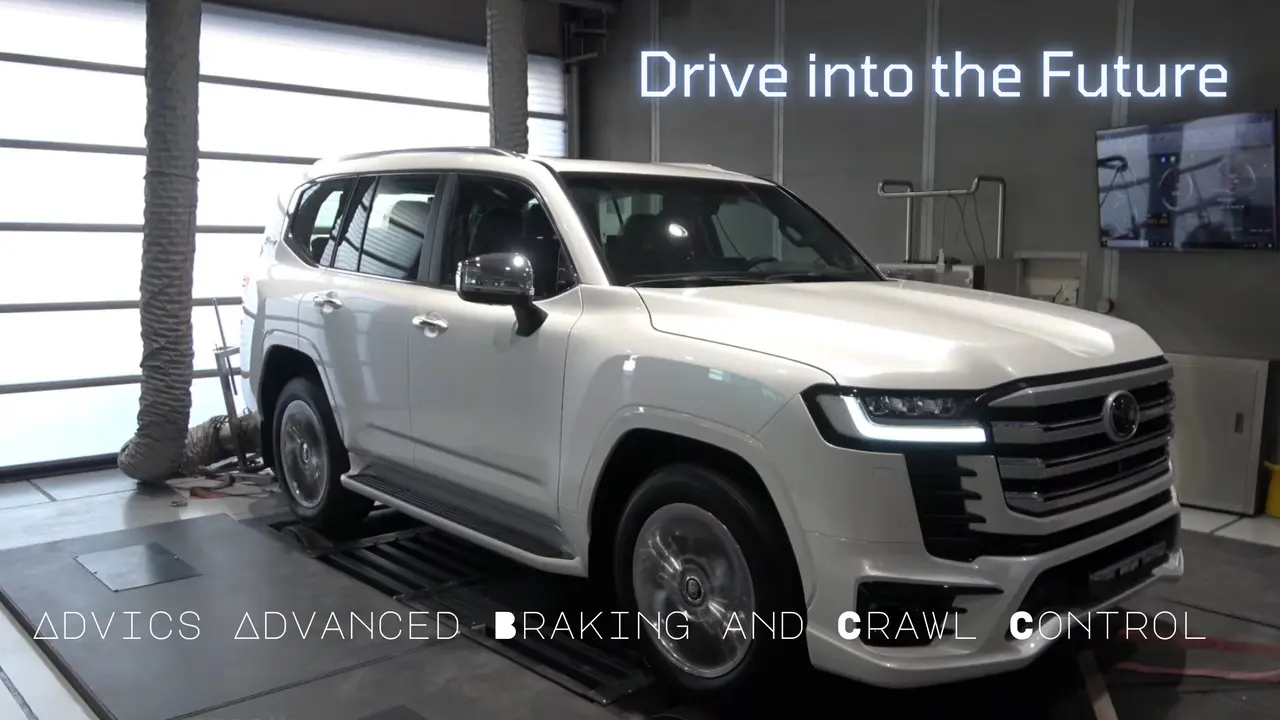
Regenerative Hybrid Braking System
Toyota is a company that never stops evolving, a year passes and they are rolling out a new feature with such advancement and simplicity that it becomes a gold standard for the automotive industry. Toyota is pioneering in giving reliable Hybrid Synergy technology to all kinds of automobiles. Since we all know that improper maintenaince of the braking system in a hybrid vehicle adds to it being damaged and needs replacement quite often. Recently Toyota and Advics have come up with a better and more reliable braking system that has greatly improved the regenerative capacity of a hybrid car or truck. Toyota simply refers to it as Electronically controlled brake system (AHB-Rx)
Advics new technology has been adopted for the new Toyota Land Cruiser. The new technologies adopted this time are “next-generation off-road control (crawl control)” and “caliper-integrated electric parking brake for large vehicles,” which contribute to the Land Cruiser’s essential qualities of “reliability, durability, and off-road performance,” and play a part in making the car “easy to drive on any road in the world, and providing fatigue-free driving.”
Crawl control is a function that significantly reduces the burden on the driver when driving on extremely rough roads. It automatically controls engine output. The brake hydraulic pressure to avoid slippage and wheel lock and maintain an extremely low speed, freeing the driver from operating the accelerator and brakes. This improves steering concentration.
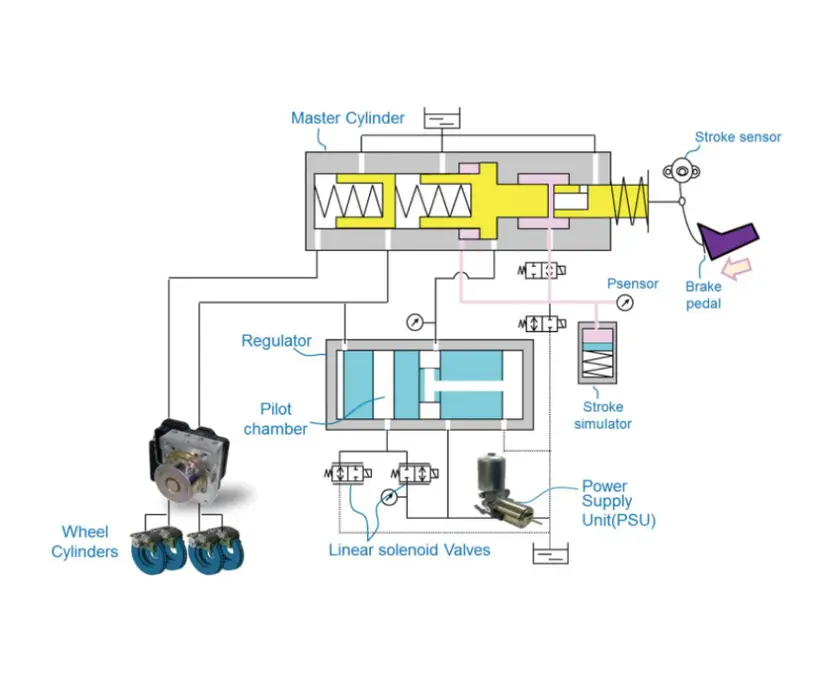
The Advics electronically controlled brake system (AHB-Rx) and high-performance ESC modulator (V3.5G), provides high responsiveness, smooth control. The operating time has been extended, significantly enhancing the vehicle’s existing strengths of off-road performance and peace of mind on rough, rocky roads and other serious off-road terrain. This has greatly improved the quality of the vehicle in practical use on snowy and dirt roads.
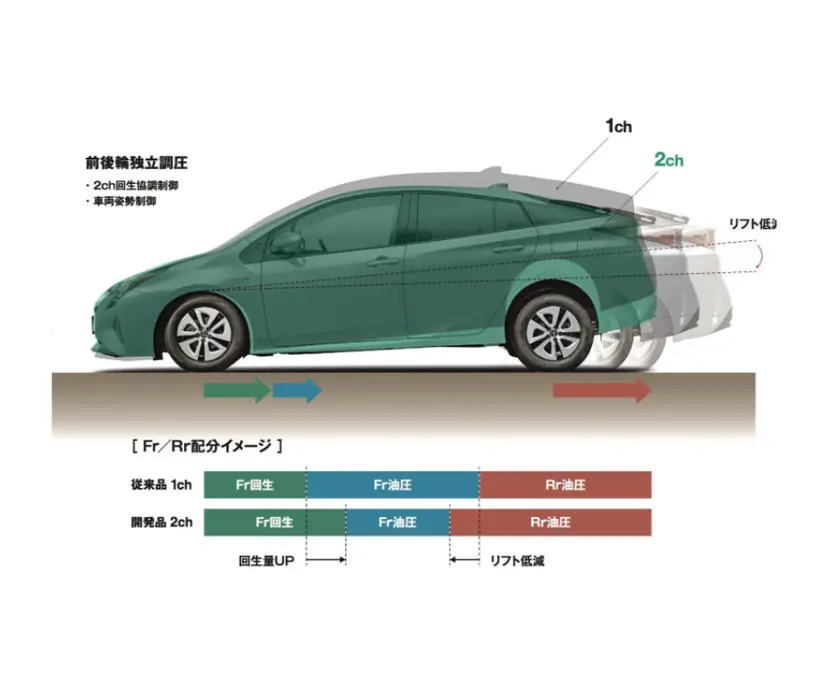
Cooperative Regenerative Braking
Cooperative regenerative braking intelligently distributes braking force between hydraulic brakes and regenerative braking based on the driver’s braking demand.
Conventional hydraulic braking systems consist of brake calipers, brake pads, and brake discs. When the driver presses the brake pedal, hydraulic pressure is generated, causing the calipers to press the pads against the discs. This process converts the vehicle’s kinetic energy into heat, which is released into the atmosphere to slow the vehicle.
In Hybrid Electric Vehicles (HEVs) and Battery Electric Vehicles (BEVs), regenerative braking recovers energy that would otherwise be wasted. By using the electric motor as a generator during deceleration, kinetic energy is converted into electrical energy and stored in the battery for later use.
This system significantly improves fuel efficiency in HEVs and increases energy efficiency in BEVs, helping to extend driving range. To maximize this benefit, it is desirable to rely as much as possible on regenerative braking during deceleration and reduce the load on the hydraulic braking system.
As shown in the diagram below, when the driver lifts their foot off the accelerator to slow down, mild regenerative braking—similar to traditional engine braking—is typically applied. Some vehicles default to coasting, which does not activate regeneration, while others allow the driver to adjust the level of deceleration using drive modes or steering-wheel paddles.
When the driver presses the brake pedal, the hybrid vehicle braking system calculates the required braking force based on the amount of pedal pressure applied. It then precisely controls the balance between hydraulic braking and regenerative braking to deliver smooth and consistent deceleration.
In the diagram above, regenerative braking is shown as a smooth, continuous line. In real-world operation, however, the regenerative braking force fluctuates slightly. Despite this, the total braking force—represented by the dashed line—remains stable and does not fluctuate.
This stability is achieved through accurate coordination between the hydraulic and regenerative braking systems. Without proper control, variations in braking force could occur, leading to an inconsistent braking feel and discomfort for the driver. The coordinated control ensures a natural, predictable braking response under all driving conditions.
Related reading

toyota
Toyota Land Cruiser 300 Now Comes with Hybrid Power
Toyota Land Cruiser 300 Now Comes with Hybrid Power Toyota has officially unveiled the hybrid version of its flagship SUV, the Land Cruiser 300, marking a significant milestone in the brand’s electrification journey. The introduction of this hybrid powerhouse often called the LC300 reinforces Toyota’s commitment to sustainable mobility without compromising the legendary off-road capability […]
![Honda ADAS Calibration Guide [Step-by-Step Tutorial]](/uploads/2025/09/Honda-ADAS-Calibration-1280.webp)
honda
Honda ADAS Calibration Guide [Step-by-Step Tutorial]
Honda ADAS Calibration Operation Instructions Advanced Driver Assistance Systems (ADAS) have become a vital component of modern vehicles, enhancing safety, reducing human error, and aiding drivers in critical moments. The Honda is equipped with a sophisticated ADAS suite, including features such as lane departure warning, forward collision warning, and adaptive cruise control. Proper calibration of ADAS […]
toyota
Toyota F33A-FTV 3.3L Engine: Specs, Reliability, and Owner’s Guide
Toyota F33A-FTV 3.3L twin-turbo V6 diesel engine marked a significant shift in the automotive landscape for Toyota’s most enduring off-road platforms. Launched in 2021, the F33A-FTV debuted in the venerable Toyota Land Cruiser 300 and was later adopted by the Lexus LX 500d. This engine is historic for the manufacturer, representing their first-ever production V6 diesel, […]
toyota
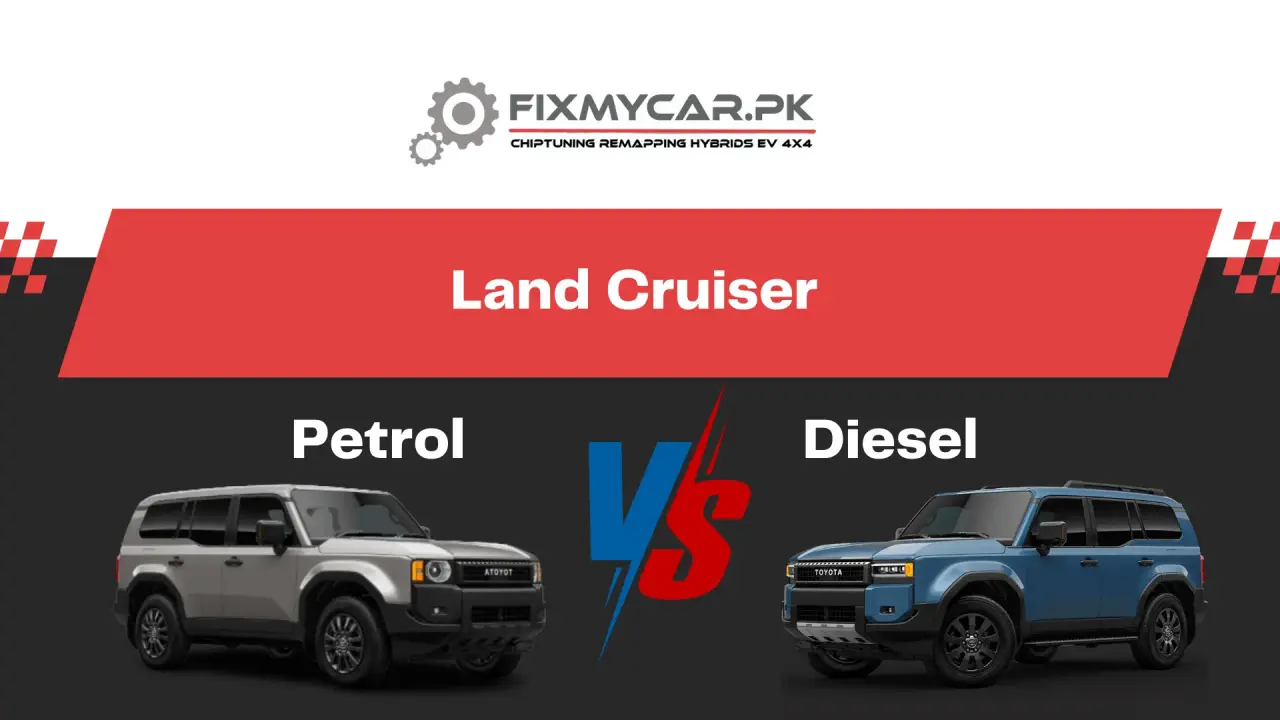
Land Cruiser Petrol vs Diesel: Which Engine is Right for You?
Land Cruiser Petrol vs Diesel: Which Engine is Right for You? When choosing between a diesel Land Cruiser (LC) and a petrol Land Cruiser, prospective buyers often weigh factors such as performance, fuel economy, maintenance costs, durability, and resale value. This detailed comparison will help you determine which variant best suits your needs. 1. Understanding […]

toyota
Toyota Land Cruiser 70 series
When you want to Ride in Style with the Land Cruiser 70 Series Soft Top and do not want to compromise on the capabilities of off-roading this military spec Landcruiser can be the best bang for the buck. The Land Cruiser 70 Series Soft Top provides the versatility that most off roaders can not offer. […]

toyota
Toyota Land Cruiser ECM REMAP
ECM REMAP (Toyota Land Cruiser Remap) The Toyota 2TR-FE is a 2.7 L straight-four 4-stroke natural aspirated gasoline engine from Toyota TR-family. The 2TR-FE engine was manufactured in Kamigo Plant and Toyota Motor Manufacturing Indonesia. The Toyota Land Cruiser Remap Prado TRJ120 (Japanese: トヨタ・ランドクルーザー プラド, Toyota Rando-Kurūzā Purado) is a full-size four-wheel drive vehicle in […]