
Anti-lock Braking System (ABS)
Anti-lock Braking System (ABS): Complete Guide, Benefits, Common Issues, and Service Tips Anti-lock Braking System (ABS) is a cornerstone of modern vehicle safety. It prevents wheel lock-up during hard braking, allows you to steer while stopping, and significantly reduces the risk of skidding. This comprehensive guide explains how ABS works, its integrated features like EBD, […]
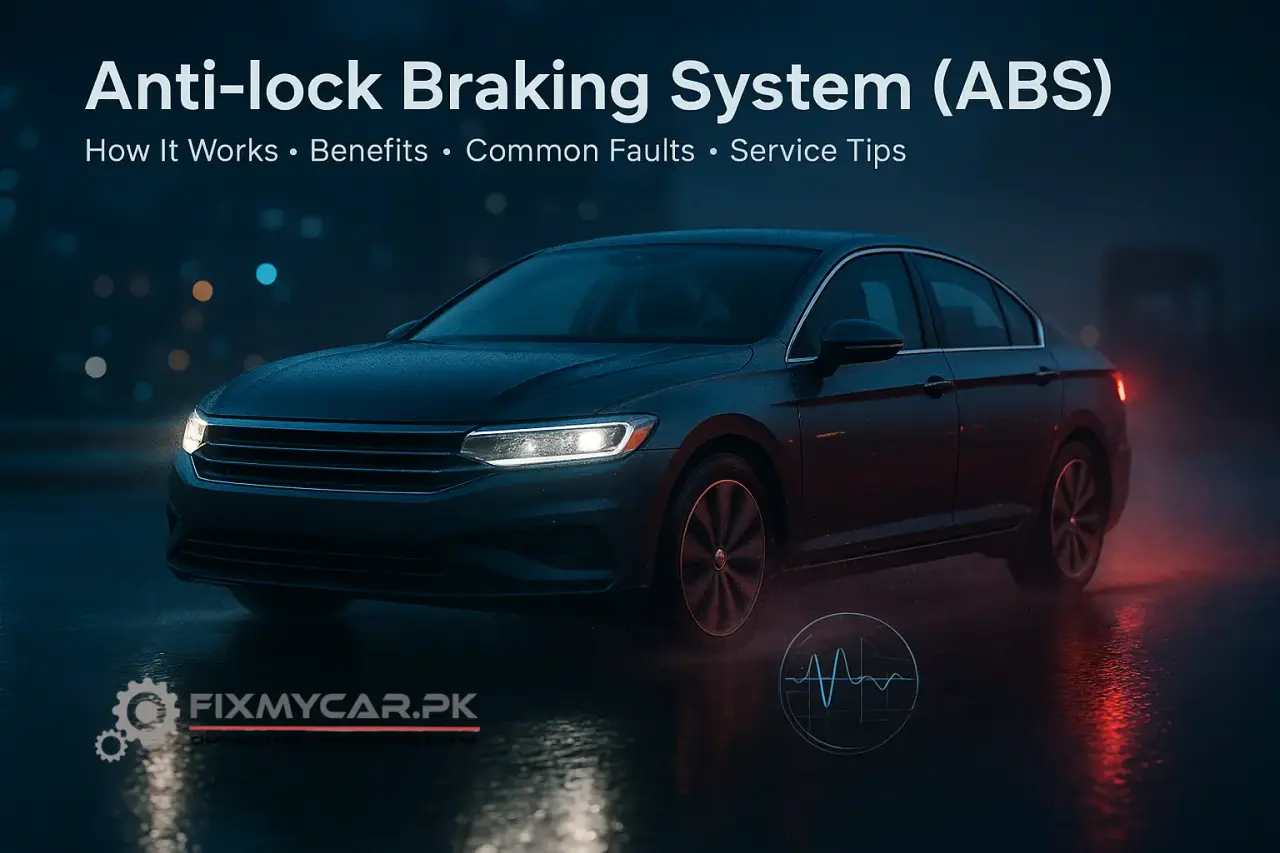
Anti-lock Braking System (ABS): Complete Guide, Benefits, Common Issues, and Service Tips
Anti-lock Braking System (ABS) is a cornerstone of modern vehicle safety. It prevents wheel lock-up during hard braking, allows you to steer while stopping, and significantly reduces the risk of skidding. This comprehensive guide explains how ABS works, its integrated features like EBD, EBA, TCS, and ESC, symptoms of failure, diagnostic steps, maintenance tips, and where to get professional ABS service in Pakistan.
FixMyCar.pk provides ABS inspections, resets, brake service, and fluid upgrades in Islamabad and Rawalpindi. For appointments: +92 331 222 7989 or support@fixmycar.pk.
What Is ABS?
ABS (Anti-lock Braking System) is an active safety system that modulates brake pressure to prevent wheel lock-up under heavy braking. By maintaining tire rotation and traction, ABS enables shorter, more controlled stops and preserves steering control, helping you avoid obstacles.
- Core function: Prevent wheel lock-up and maintain traction.
- Key outcome: Keep steering responsive during emergency braking.
- Best results: When combined with healthy brake pads, rotors, and quality brake fluid.
How ABS Works (Simple and Accurate)
- Sensors monitor wheel speed at each wheel.
- The ABS control module compares speeds to detect imminent lock-up.
- The hydraulic modulator pulses brake pressure through solenoid valves.
- The cycle repeats several times per second, keeping wheels rotating just below the slip threshold.
What you feel during ABS activation:
- A pulsating brake pedal
- Fast clicking or buzzing noise
- The ABS indicator may flash during activation
These sensations are normal in emergency stops or low-traction surfaces (wet roads, gravel, snow).
ABS-Integrated Systems You Should Know
Modern ABS is part of a broader active safety suite that uses wheel speed, steering angle, and gyro sensors:
- EBD (Electronic Brake-force Distribution): Optimizes brake force per wheel to reduce rear lock-up and improve stability with varying loads.
- EBA/BA (Emergency Brake Assist): Detects panic braking and boosts hydraulic pressure to reduce stopping distance.
- TCS (Traction Control System): Limits wheel spin during acceleration by reducing engine torque or applying brake force.
- ESC/ESP (Electronic Stability Control): Helps correct understeer/oversteer by braking individual wheels and reducing torque.
Benefits of ABS in Real Driving
- Shorter, straighter stops on most surfaces
- Ability to steer around hazards while braking
- Reduced risk of skidding and loss of control
- Better stability with varying loads (via EBD)
- Enhanced safety synergy with ESC/TCS
Note: Poor or faded brake pads, overheated rotors, worn tires, or low-quality fluid can degrade ABS performance.
Common ABS Warning Signs
If your ABS system needs attention, you may notice:
- ABS warning light stays on
- Brake pedal pulsation in normal (non-emergency) braking
- Unusual buzzing or grinding from the ABS pump at low speeds
- Increased stopping distance or unstable braking
- Speedometer fluctuations (in some vehicles) if a sensor shares signals
- Traction or stability control lights illuminated together with ABS
On some Toyota hybrids and Honda models, specific codes like C1251, C1256, or U0416 may appear. If you drive a Toyota Prius, ABS unit service is a known maintenance item.
Frequent ABS Faults and Causes
- Wheel speed sensor failure: Corrosion, wiring damage, or debris on tone rings.
- Faulty ABS module/ECU: Internal electronics failure or water ingress.
- Hydraulic modulator issues: Stuck solenoids or pump motor failure.
- Low brake fluid or contaminated fluid: Moisture reduces boiling point and can corrode components.
- Worn brake pads/rotors: Reduce friction consistency; can confuse wheel slip detection.
- Weak battery/voltage drops: Can trigger ABS and stability control faults.
- Aftermarket wheel bearings or hub tone ring mismatch: Incorrect signals to ABS ECU.
Diagnosing ABS Problems (Workshop-Level Overview)
- OBD-II scan: Read ABS/ESC/TCS codes and freeze frame data.
- Live data: Compare wheel speed sensor outputs, steering angle, and yaw rate.
- Visual inspection: Wiring, connectors, corrosion, wheel hubs, tone rings.
- Hydraulic checks: Pump actuation tests, solenoid activation, master cylinder health.
- Brake fluid testing: Moisture content and condition.
- Road test: Controlled ABS activation to evaluate modulation and pedal feedback.
At FixMyCar.pk, we use professional diagnostics, including OEM-level and advanced scan tools, to quickly pinpoint faults and recommend the most effective repair.
ABS Maintenance and Best Practices
- Replace brake fluid every 2–3 years or per manufacturer interval (ABS relies on clean, moisture-free fluid).
- Use OEM-quality brake pads and rotors for consistent friction and heat tolerance.
- Keep tires matched and properly inflated; uneven diameters or grip can confuse ABS logic.
- Clean sensors and tone rings during brake service; check for rust rings and debris.
- Avoid jump-starts with incorrect polarity; voltage spikes can damage ABS electronics.
- After any hub/bearing replacement, ensure the correct ABS tone ring specification.
ABS on Different Road Conditions
- Wet roads: ABS helps maintain control and steering; increase following distance.
- Gravel/snow: ABS prevents wheel lock, but on loose surfaces stopping distances can increase; consider winter tires.
- High-speed braking: ABS supports controlled deceleration; ensure tires are speed-rated and in good condition.
- Downhill braking: Use engine braking; avoid continuous hard brake application to prevent fade.
Driving Technique with ABS
- Apply firm, steady pressure to the brake pedal do not pump the brakes with ABS.
- Steer around obstacles as the system maintains traction.
- If pedal pulsates and you hear buzzing, continue to brake firmly this is normal ABS operation.
ABS vs. Non-ABS Braking
- ABS-equipped vehicles: Shorter stops on wet and most dry conditions, and maintain steering control.
- Non-ABS vehicles: Skilled threshold braking can be effective, but is difficult to perform consistently in emergencies.
Cost of ABS Repairs in Pakistan
Prices vary with vehicle make, model, and part availability:
- Wheel speed sensor: Typically a modest cost; varies by OEM.
- ABS pump/module: Higher cost; remanufacturing may be an option.
- Brake fluid service: Affordable, essential preventive maintenance.
- Complete ABS unit service (e.g., Toyota Prius): Priced based on diagnosis and parts.
For quotes and availability in Islamabad/Rawalpindi: Call 0331-2227989.
ABS for Hybrids and EVs
Hybrids and EVs use regen braking in tandem with friction brakes. The ABS/ESC controller coordinates regenerative braking with hydraulic modulation:
- Smooth transition from regen to friction under hard stops
- Critical calibration after brake or hub work
- Prius and other Toyota hybrids may log ABS codes (e.g., C1251, C1256) requiring specialist attention
FixMyCar.pk specializes in hybrid brake and ABS service for Honda and Toyota.
When to Reset or Recalibrate ABS
- After replacing wheel speed sensors, steering angle sensors, or ABS modules
- Following brake hydraulic work or master cylinder replacement
- Post-alignment if steering angle sensor values are off
- After hub/bearing or tone ring replacement
Professional scan tools are required for resets, bleeding (via ABS pump cycling), and sensor calibration.
Safety and Legal Compliance
- ESC (which builds on ABS) is mandated in many markets; maintaining a functional ABS/ESC system is a safety priority.
- Driving with an illuminated ABS light may disable traction and stability features, increasing risk.
ABS Myths Debunked
- Myth: “ABS shortens stopping distance on every surface.” Reality: On loose gravel or deep snow, ABS can increase stopping distance but maintains steering control overall safer.
- Myth: “Pulsation means brakes are broken.” Reality: Pulsation during hard braking is normal ABS modulation.
- Myth: “You should pump brakes with ABS.” Reality: Do not pump; press firmly and steer.
Professional ABS Service in Islamabad/Rawalpindi
FixMyCar.pk offers:
- ABS system reset and coding
- Brake service and fluid upgrades
- OEM-level diagnostics for ABS, ESC, TCS
- Toyota Prius ABS unit service and hybrid brake integration
- On-site service by trained technicians
Booking and support:
- Phone/WhatsApp: +92 331 222 7989
- Email: support@fixmycar.pk
- Address: Plot 45, Street 10, I-9/2, Islamabad, Pakistan
We are recognized hybrid and EV experts with capabilities in ECU reprogramming, diagnostics, and advanced calibrations.
Related reading

tesla
Tesla Diagnostic Interfaces & Protocols
Tesla Diagnostic Interfaces & Protocols: Everything You Need to Know If you’re diving into Tesla diagnostics, you’ll quickly realize that it’s not your typical OBD-II experience. Tesla vehicles use a mix of proprietary and evolving diagnostic interfaces depending on the model year. In this guide, we’ll break down Tesla diagnostic ports, what protocols they use, […]
toyota
Buy AdBlue in Pakistan – Supply, Refilling, and AdBlue System Service
Where to buy AdBlue (DEF) in Pakistan: ISO 22241 certified fluid for diesel SCR systems, refill intervals, common AdBlue fault codes (P20EE, P20E8, P207F), nationwide delivery and professional SCR servicing by Fixmycar.pk.
toyota
Toyota F33A-FTV 3.3L Engine: Specs, Reliability, and Owner’s Guide
Toyota F33A-FTV 3.3L twin-turbo V6 diesel engine marked a significant shift in the automotive landscape for Toyota’s most enduring off-road platforms. Launched in 2021, the F33A-FTV debuted in the venerable Toyota Land Cruiser 300 and was later adopted by the Lexus LX 500d. This engine is historic for the manufacturer, representing their first-ever production V6 diesel, […]
honda
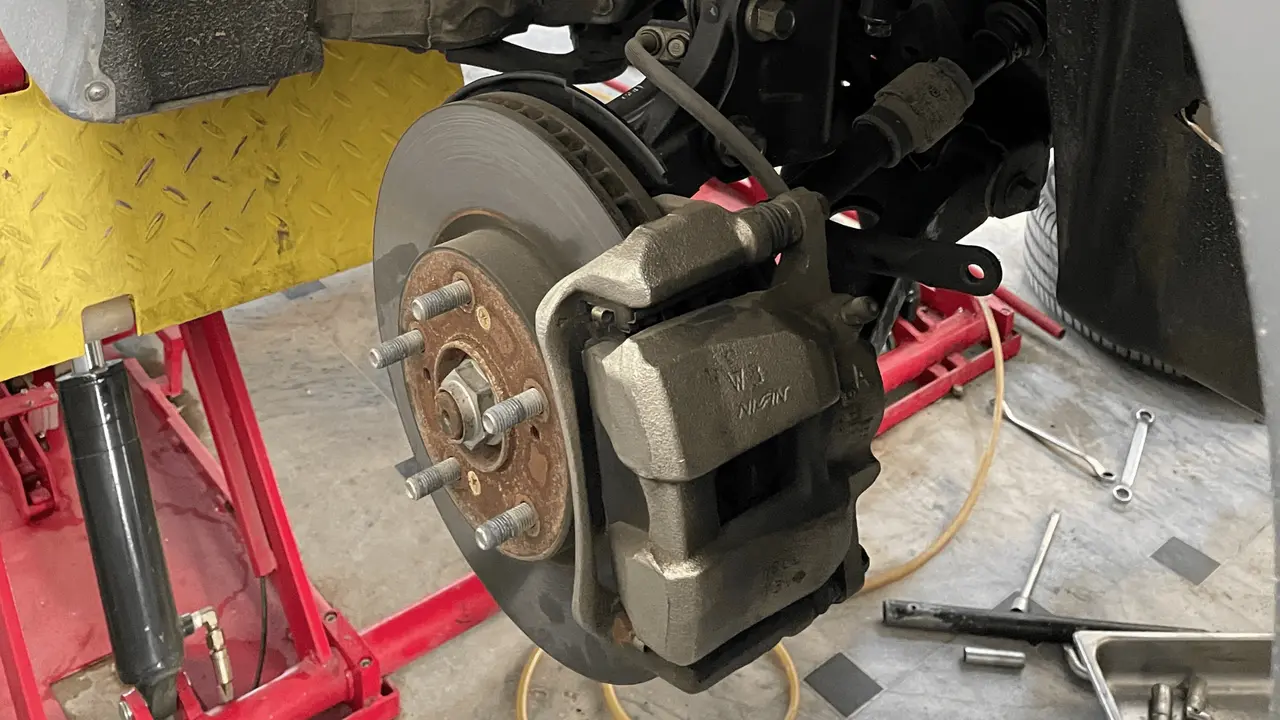
Brake Pads Cheap vs Expensive
Brake Pads Cheap vs Expensive: Which One Should You Choose? Brake pads are one of the most essential components of your vehicle’s braking system. When it comes to safety, performance, and long-term cost, the type of brake pads you choose can make a significant difference. In this in-depth guide, we’ll explore the real differences between […]
maintenance
Brake Service and Why It Is Important
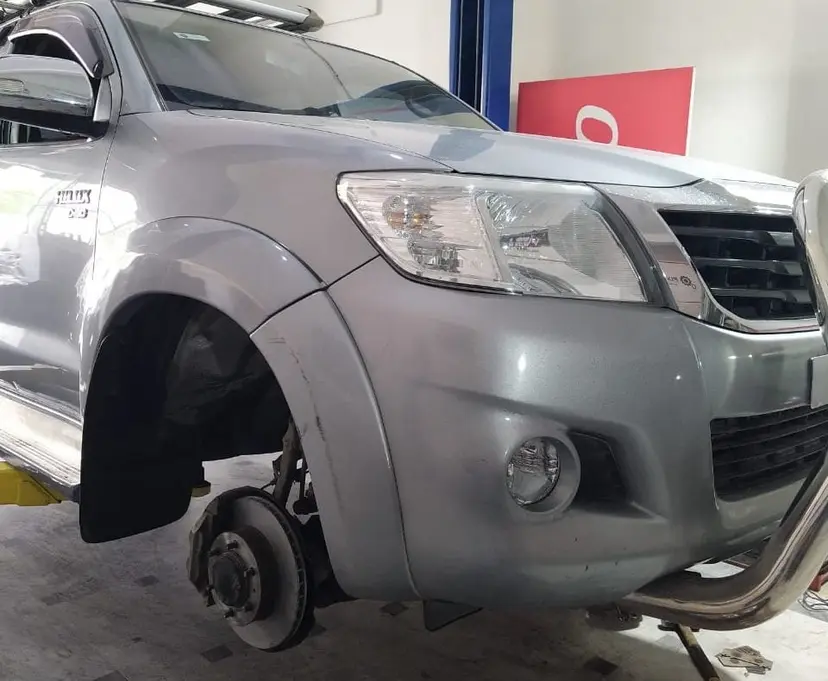
Brake Service and Why It Is Important Why Brake Service Should Never Be Ignored Your vehicle’s braking system is its most important safety feature. Whether you’re driving in city traffic or cruising on highways, your ability to stop safely depends on the condition of your brakes. Unfortunately, many drivers delay or neglect brake maintenance, which […]
toyota
Toyota CVT TC vs CVT FE 08886-02105
Toyota CVT TC vs CVT FE — Differences, Compatibility, Climate Guidance, and Best Practices Choosing the correct Toyota CVT fluid is critical for transmission longevity, smooth shift performance, and fuel economy. Two genuine options appear frequently in owner manuals and parts catalogs: Toyota CVT TC and Toyota CVT FE (part no. 08886-02105). While both are […]